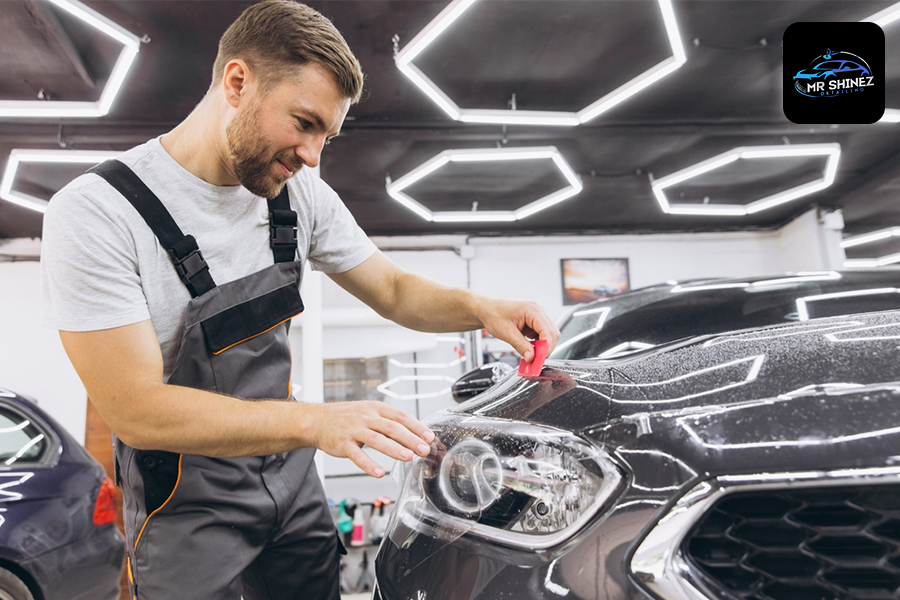
A car is our second most expensive purchase, after a house, for a significant proportion of us. Nevertheless, when we see a spurt in our roof we would not consider letting it spurt without fixing it, but we will not give much consideration to the upkeep of our car. Once or twice a month we can go to a local gas station using a tunnel wash and stay a day.
But there is an enormous difference between car washing and skillful detailing. In case a car wash is a quick morning shower it would be a full day spa with rigorous medical check-up. Not only the question of the car being shiny or not, but also the integrity of the paint structure and the neatness of the interior will also have to be enhanced. How often then should you be pressing the reset button on the state of the car you are driving?
The Standard Rule: The 4-to-6 Month Baseline
As a rough outline, the majority of car enthusiasts and professional detailers would recommend that a full detail should be done on a two to six month time frame.
This is not a chance timeline, this one is founded on the science of protection. Most of the carnauba waxes begin to break down in 90 days of exposure to the elements. This may be applied to six months under synthetic sealants which are robust. When this protective layer cannot be developed, your car is stripped bare (this thin clear layer of paint that houses the rest of the paint under) to the UV rays, acid rain and bird droppings.
Why One Size Doesn’t Fit All: Variable Timelines
The Daily Commuter vs. The “Garage Queen”
Acidic substances in the atmosphere such as the sap of trees and bird droppings can carve into the paint when placed on it over a period longer than several days in the sun and thus permanent marks were formed. The exterior of these cars may require to be detailed after every three months in order to preserve the cleanliness and decontamination of the surfaces. Contrarily, a vehicle that has a silk cover parked on a weekend in a climate-controlled garage can be serviced by a professional at least once a year.
The “Family Taxi” and the Interior Factor
Much attention is drawn to the paint, but it is the inner part where people get to spend some time. With pets or kids, a car can be a favorite habitat of growth of bacteria and allergens. The carpet and the upholstery are stained with the late lattes, broken crackers and pet dander. Under such a situation, even though this may seem like a great thing outside, having an interior professional every 2 to 3 months will be a clever move.
Regional Climate and Environmental Impact
We have been enjoying worse weather trends which influence the lives of vehicles in 2026. Set on a sea beach, salt of the air is a lethal invasive killer of paint and undercarriage components. Inhabitants of regions prone to wildfires can discover the alkalinity of the ash deposited on the earth devastating to the completion of the car unless eliminated by an expert.
Detailing vs. Maintenance Washes: Know the Difference
The key mistake of the owners is that detail is a replacement of a wash. The reality of the situation is that they do cooperate with one another. A deep clean and protection stage is one of the professional details. It encompasses such a procedure as the clay bar procedure (extracting the microscopic grit off the paint) and the polishing (getting the fine scratches and oxidation off).
Among these large details, there is still the big wash that you need to perform every two weeks. The maintenance wash is just meant to clean the loose dirt on the surface such that it does not have time to adhere to the paint. However, watch out for the home-cooked bucket wash. A used t-shirt and one bucket of soapy water are not so helpful to the situation, they only create swirl marks, causing the paint to wear off.
How to Tell It’s Time: The Three-Point Test
The Water Bead Test: The next time it rains or you wash your car look at the hood. Are the balls of water spherical and tight? Or is it in grand sheets not rucked? Provided that the water does not bead, then your wax or sealant failed, and your paint is not enclosed.
The Plastic Bag Test: You can do it after washing and drying your car, you can take your hand in a thin plastic bag and rub all its paint. When it is as coarse as coarse sandpaper, then your paint has glued contaminants. You are to be professionally treated with clay bar.
The Interior Sniff Test: Close out the doors and the windows and leave the car in the sun for an hour. Do you get a smell of nothing when you open the door, or musty? Assuming that it happens to be the latter, the cloth absorbs the allergens and bacteria and cannot be fixed with a simple vacuum cleaning.
The Long-Term Financial Payoff
Professional detailing is a luxury service that is regarded as such, but, where money is concerned, it is a value-add. According to the resale market statistics, an average car with an excellent paint job that has a well-maintained interior is likely to be sold at high rates of 10 to 15 percent more than a car that is in good condition. Resale value valued in thousands of dollars is actually insured by hundreds of dollars annually on detailing.