For many of us, a caravan is far more than just a vehicle or a trailer; it is a passport to freedom. It’s the “home away from home” that carries our memories from the salt-sprayed coastlines to the dusty trails of the outback. However, that very sense of adventure puts your caravan’s exterior under constant, aggressive attack.
Most owners believe that a quick bucket of soapy water and a garden hose after a trip is enough to keep their pride and joy in top shape. But there is a massive difference between “cleaning” a surface and “protecting” it. While a wash removes the loose dust, professional caravan polishing is the ultimate insurance policy for your vehicle’s lifespan, aesthetics, and future resale value.
The Science of the “Shell”: Understanding Caravan Surfaces
To understand why polishing is essential, we first have to look at what your caravan is actually made of. Unlike the metal panels of a modern car, which are covered in layers of hard clear-coat paint, caravans are built using materials designed for flexibility and lightweight strength.
Gelcoat vs. Aluminum vs. Fiberglass
Most modern caravans feature a fiberglass body topped with a “gelcoat”—a specialized resin that provides that smooth, shiny finish. Older or traditional models might use corrugated or smooth aluminum panels. These materials are much more porous than automotive paint. Because they are “breathable” and slightly softer, they are significantly more susceptible to environmental damage. Standard car waxes often sit on the surface and slide off, whereas caravan-specific polishing compounds are designed to work with these unique textures.
Why Porosity Matters
Because the exterior shell is porous, dirt, microscopic algae, and road grime don’t just sit on top of your caravan; they eventually become embedded inside the surface. If you simply wash the vehicle, you’re only cleaning the “peaks” of the surface while the “valleys” remain filled with contaminants. Professional polishing deep-cleans these pores, pulling out the grime before a protective sealant is applied to lock the “valleys” shut.
The Silent Killer: UV Degradation and Oxidation
From Gloss to “Chalky”
Oxidation is a chemical reaction that occurs when the oxygen in the air meets the polymers in your caravan’s gelcoat, accelerated by intense UV rays. In a sun-drenched climate, this process happens rapidly. The UV light breaks down the molecular bonds of the exterior, causing it to dry out and become brittle. That chalky powder isn’t just dirt; it is the actual “skin” of your caravan disintegrating.
Preventing “Clear Coat Failure”
Once oxidation moves past the surface level, it can lead to delamination or clear-coat failure, where the exterior begins to peel or flake away like a bad sunburn. At this stage, a simple polish won’t fix the problem—you’re looking at a full respray or gelcoat restoration costing thousands. Regular polishing acts as a high-strength sunscreen, blocking those harmful rays and keeping the exterior flexible, vibrant, and healthy.
Beyond Aesthetics: The Protective Shield
Creating a Hydrophobic Barrier
A professionally polished caravan becomes “hydrophobic,” meaning it literally fears water. Instead of water spreading out and drying into ugly “water spots” (which are actually mineral deposits eating into your finish), the water beads up and rolls off. This prevents acidic rainwater or morning dew from sitting on the surface and etching permanent marks into your caravan.
Defense Against Environmental Contaminants
Nature is surprisingly corrosive. Bird droppings, tree sap, and smashed bug splatter contain acids that can “burn” into a gelcoat within days if left in the sun. Similarly, road salt from coastal drives can trigger rapid corrosion on aluminum parts. A high-quality polish creates a “sacrificial layer.” This layer takes the chemical hit so that the actual body of your caravan remains untouched.
The “Easy-Clean” Factor: Saving Your Future Weekend
Reducing “Road Film” Adhesion
Dirt and grime need something to grip onto. A weathered, unpolished surface is rough and “sticky” at a microscopic level. A polished surface, however, is perfectly smooth. This makes it nearly impossible for road tar, dust, and mud to bond with the caravan.
No More Scrimping and Scrubbing
The irony of caravan maintenance is that heavy scrubbing often does more harm than good. Using stiff brushes or harsh chemicals to remove stubborn stains creates “swirl marks” and micro-scratches. By keeping the caravan polished, you’ll find that a gentle rinse and a soft sponge are all you need for your post-trip wash. You save time, and you save the surface from unnecessary abrasion.
Maximizing Your Asset: The Financial Argument for Polishing
Resale Value and First Impressions
In the secondhand market, “curb appeal” is everything. A dull, faded caravan suggests to a buyer that the vehicle hasn’t been cared for, leading them to wonder what else has been neglected. Conversely, a caravan with a showroom shine signals a fastidious owner. A professional polish can easily add thousands to your final sale price.
Lowering Long-Term Maintenance Costs
Think of polishing as preventative medicine. The cost of an annual professional detailing service is a tiny fraction of what you would pay for a full exterior restoration or the loss in trade-in value due to “paint distress.” It is the most cost-effective way to preserve the structural integrity of the shell.
DIY vs. Professional Polishing: What’s the Difference?
Specialized Equipment and Compounds
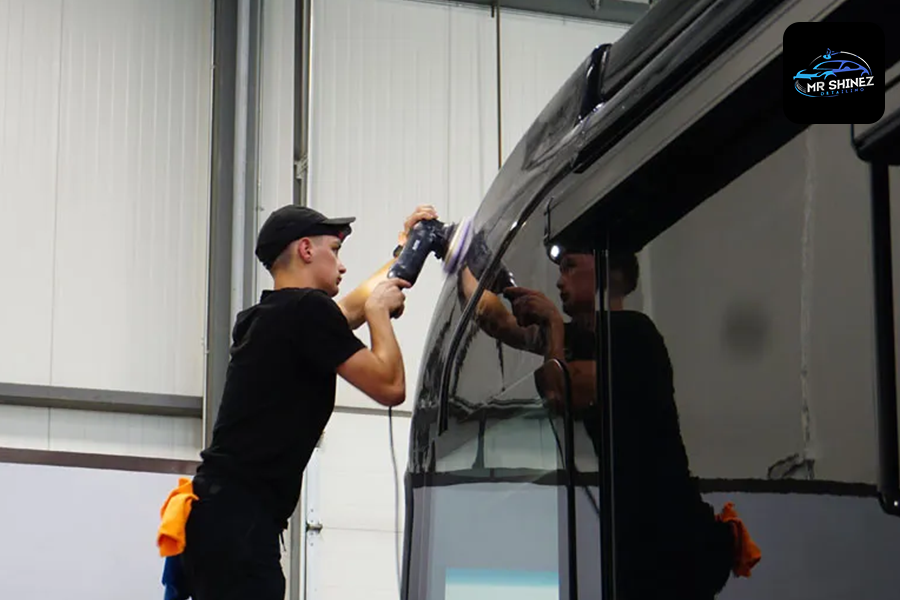
The sheer surface area of a caravan is daunting. To get a consistent finish without “tiger stripes” or patches, you need professional dual-action polishers and marine-grade compounds. These products are specifically engineered to tackle the heavy oxidation found on fiberglass and gelcoats, which is much tougher than standard car paint.
The Risk of “Burning” the Surface
Caravans are covered in decals, plastic vents, and rubber seals. A high-speed buffer in the hands of an amateur can easily “burn” through a decal or melt a plastic fitting in seconds. Professionals know exactly how much heat and pressure each specific material can handle, ensuring a deep shine without the risk of permanent damage.
Conclusion
You wouldn’t head out into the midday sun without protection; don’t send your home on wheels out without its protective shield.
Is your caravan looking a little dull or chalky after your last trip? Don’t wait for the damage to become permanent. Would you like a free quote on a professional exterior protection package to bring back that showroom shine?